
Mass schedule
6:30 am English
12:10 pm English
7:00 pm Latin with Blessing of Candles and Procession
The garage rollup door will close at 10:15 pm
One of the most ancient observances in the Christian calendar, this feast commemorates the day when Mary and Joseph brought Jesus to the Temple in Jerusalem to be presented according to Jewish Law. We mark this day with a solemn blessing of candles and a procession. The presentation of Christ in the Temple forty days after his birth commemorates the entry of the 'True Light' into the world.
The Purification of the Blessed Virgin Mary
In the Law of Moses, a woman who bore a son was ritually unclean for 40 days (Leviticus 12). Though the Blessed Mother had no sins to repent, she fulfilled the Law of Purification.
In Luke 2:24, St. Joseph offered two turtledoves or pigeons, as depicted in the painting below. The Holy Family could not afford a lamb, so they offered these for the purification ritual (Leviticus 12:8).
If, however, she cannot afford a lamb, she may take two turtledoves or two pigeons, the one for a burnt offering and the other for a purification offering. The priest shall make atonement for her, and thus she will again be clean.
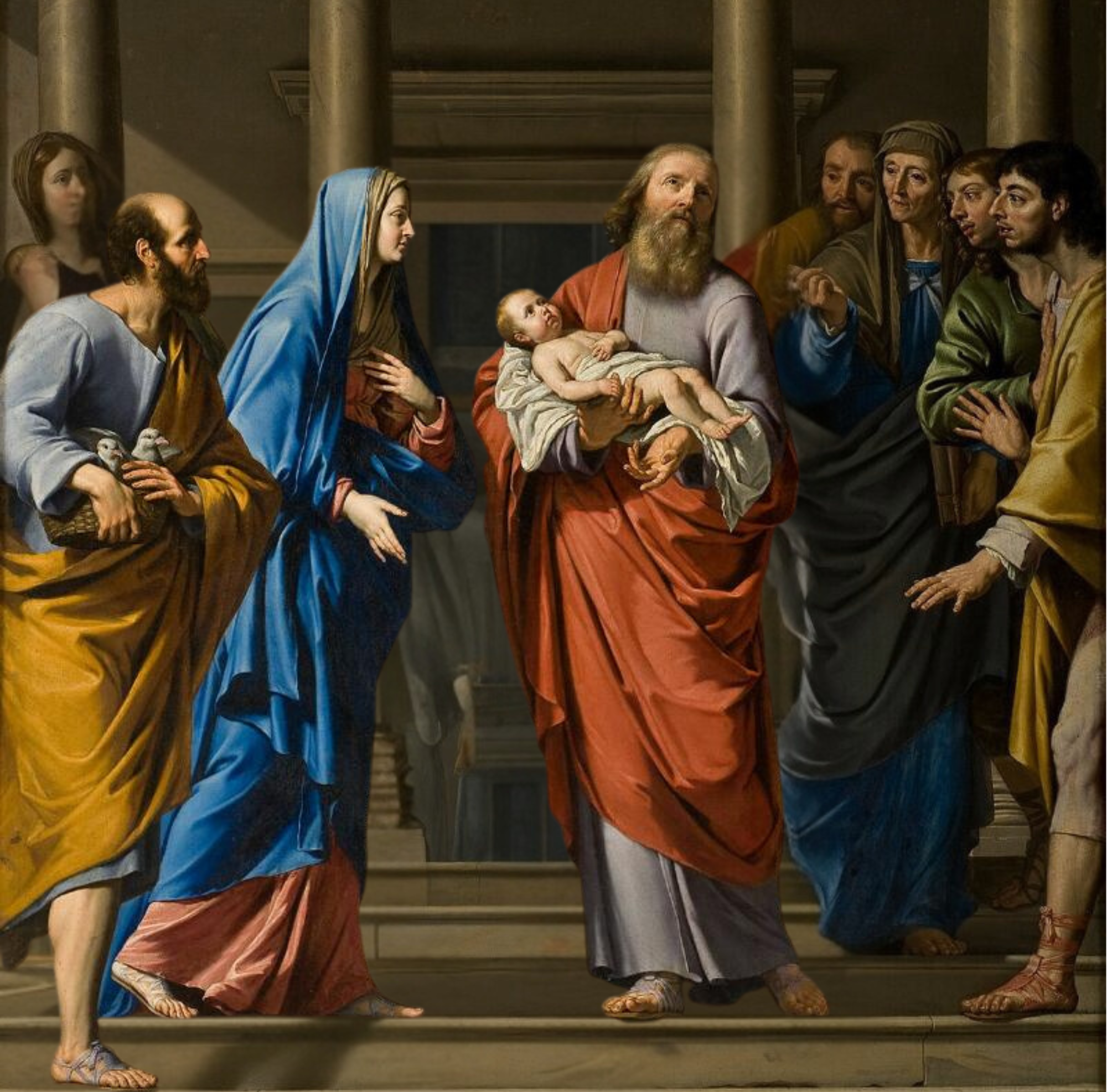
The Presentation of the Temple by Philippe de Champaigne oil on canvas painting in 1648
Nunc Dimittis — The Canticle of Simeon
Found in St. Luke's Gospel (ii, 29-32), is the last in historical sequence of the three great Canticles of the New Testament, the other two being the Magnificat (Canticle of Mary) and the Benedictus (Canticle of Zachary).
The title is formed from the opening words in the Latin Vulgate, "Nunc dimittis servum tuum, Domine" etc.). ("Now thou dost dismiss thy servant, O Lord" etc.). The circumstances under which Simeon uttered his song-petition, thanksgiving, and prophecy.
Nunc dimittis servum tuum, Domine
Secundum verbum tuum in pace: Quia viderunt oculi mei
salutare tuum Quod parasti
ante faciem omnium populorum: Lumen ad revelationem gentium,
Et gloriam plebis tuae Israel.
Now dismiss Thy servant, O Lord,
in peace, according to Thy word:
For mine own eyes hath seen
Thy salvation, Which Thou hast prepared
in the sight of all the peoples,
A light to reveal Thee to the nations
and the glory of Thy people Israel.
If the Magi offered frankincense, gold, and myrhh, why couldn’t the Holy Family afford the lamb?
Mystical City of God Book IV Ch 18