
Join us for Tenebrae
Reflect on Christ’s passion and death with chants and gradual darkness
Starting at 7:00 pm for about 2.5 hours
Garage arm bar will open at 6 pm
Church doors open at 6:30 pm
Garage roll up door will close at 11 pm
What is Tenebrae?
Tenebrae [meaning darkness in Latin] is the name given to the service of Matins and Lauds belonging to the last three days of Holy Week.
It differs from the rest of the year, all is sad and mournful, as though it were a funeral-service. [The] Psalms, Lessons, and Chants [are] expressive of grief.
Each Canonical Hour ends with the Psalm Miserere, and with a commemoration of the Death and Cross of Our Redeemer.
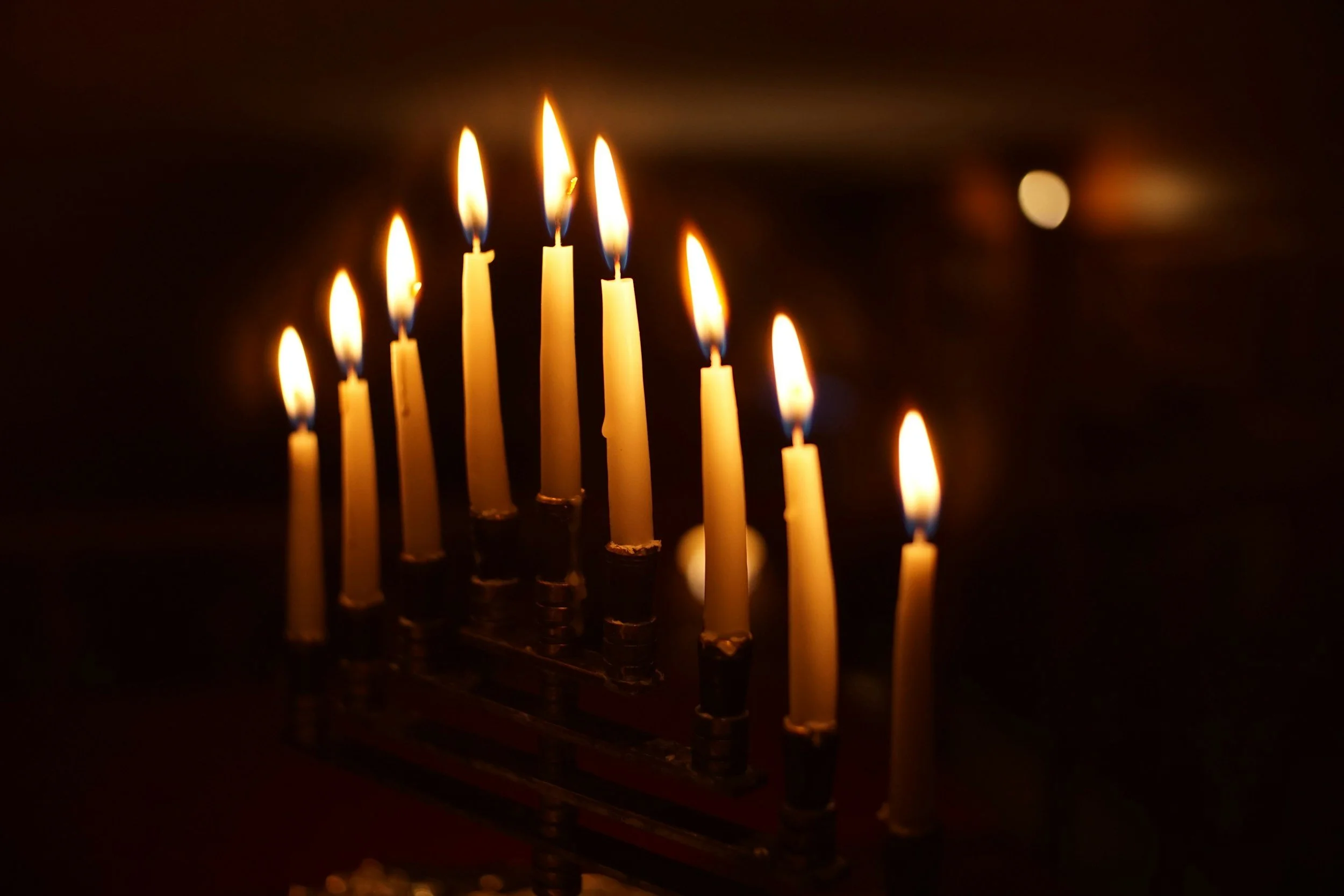
There is placed in the Sanctuary, near the Altar, a large triangular candlestick, holding fifteen candles. At the end of each Psalm or Canticle, one of these fifteen candles is extinguished; but the one, which is placed at the top of the Triangle, is left lighted…Then the Master of Ceremonies takes the lighted candle…hides it behind the Altar.
The Liturgical Year by Dom Gueranger
What does this symbolize?
Let us now study the meaning of these ceremonies. The glory of the Son of God was obscured, and, so to say, eclipsed by the ignominies he endured during his Passion.
He, the Light of the world, powerful in word and work, who, but a few days ago, was proclaimed King by the citizens of Jerusalem, is now robbed of all his honors…
…His own Disciples… are scandalized in him and abandon him… This desertion on the part of his Apostles and Disciples is expressed by the candles being extinguished, one after the other…
But Jesus, our Light, though despised and hidden, is not extinguished. This is signified by the Candle, which is momentarily placed on the Altar; it figures our Redeemer suffering and dying on Calvary.
In order to express his burial, the candle is hid behind the Altar; its light disappears… This noise and gloom express the convulsions of nature, when Jesus expired on the Cross; the earth shook, the rocks were split, the dead came forth from their tombs.
But the candle suddenly reappears; its light is as fair as ever; the noise is hushed, and homage is paid to the Conqueror of Death.
The Liturgical Year by Dom Gueranger
Reflect on the Psalms, Lessons, and Chants
You are encouraged to pray and meditate on these Scriptures - these are the Offices of Matins and Lauds of the last three days of Holy Week.
Matins
The First Nocturn
Pater, Ave, Credo in secret (silence)
This Psalm was written by David, when obliged to flee from the persecution of his son Absalom, who sought his death. It refers to Christ, and describes various incidents of his Passion.
This Psalm was written by David, under the same circumstances as the previous one. He begs God to defend him against the enemies that are seeking to destroy him. This Psalm is prophetic of the lot reserved to the Messias.
The third Psalm refers to the same period of David’s life; but whilst it describes the dangers to which this holy king was exposed, it also expresses the wonderful confidence he had that God would crown him with victory over all his enemies. In its prophetic signification, this Psalm shows us how the Man-God, even in the lowest depths of his anguish, confided in his Father’s help.
Pater noster in secret
Lessons
The Lessons of the first Nocturn… are taken from the Lamentations of Jeremias, which describe the miserable state of Jerusalem, when, in punishment for her idolatry, her people were led captive into Babylon…
She drew this frightful curse upon herself by the crimes she committed against the Song of God…This is the reason that his Lamentations are chosen for the Lessons of Tenebrae. The mournful chant, to which they are sung, is probably the one used by the Jews themselves.
First Lesson - Lamentations 1:1-5
Second Lesson - Lamentations 1:5-9
Third Lesson - Lamentations 1:10-14
The Second Nocturn
The fourth Psalm, which celebrates in such glowing terms, the glories of the Son of David, would seem, at first sight, to be inappropriate for this office, which commemorates only his humiliations…The Church has chosen it, because of the glories here prophesied of Jesus is, that He shall deliver the poor from the mighty; and the needy that had no helper. Mankind is this poor one; Satan is the mighty one; Jesus is about to deliver us from his power, by suffering what we have deserved by our sins.
The fifth Psalm conveys a moral teaching, which, if listened to, would correct many a false judgment of the world. It often happens that men are shaken at seeing the wicked prosperous, and the virtuous afflicted. It was the temptation which overcame the Apostles, when seeing their Divine Master in the hands of his enemies, they lost their faith in him as the Messias. The Psalmist owns that he himself was troubled by the same kind of thought; but God enlightened him to see the truth: it is that if Divine Providence permit iniquity to triumph for a time, the day is sure to come, when he will punish the wicked, and avenge the just that have suffered persecution.
The sixth Psalm is a reproach made to the enemies of the Divine Worship. The Jews used it, for many ages, against the Gentiles; the Christians now apply it to the Synagogue, which, after having crucified the Son of God, did its utmost to destroy his Church, by putting many of her children to death, and forbidding the Apostles to preach the name of Christ.
Pater noster in secret
Lessons
For the Lessons of the second Nocturn, the Church reads, each of these three days, a passage from St. Augustine’s Enarrations on the Psalms, which are prophetic of our Lord’s Passion.
Fourth Lesson
From the treatise of St. Augustine, Bishop, upon the Psalms 54
Fifth Lesson
From the treatise of St. Augustine, Bishop, upon the Psalms 54
Sixth Lesson
From the treatise of St. Augustine, Bishop, upon the Psalms 54
The Third Nocturn
The seventh Psalm declares the vengeance of God on those that excite his anger. It shows us what will happen to the Synagogue: after having obliged the Messias to drink the bitter chalice of his Passion, its own turn shall come, and it shall drink the cup of God’s wrath, even to the very dregs thereof.
The eighth Psalm was written after David had conquered his enemies. He speaks of the peace that was restored to Sion, and of the sudden vengeance of God that overtook the wicked. The enemies of our Savior were sleeping in their sleep; when, suddenly, the earth trembled, and God arose to judge them.
The ninth Psalm tells us of David’s tribulation when his son Absalom, the type of the Jewish people, raised the standard of revolt against him. The Royal Prophet, who is the figure of Christ, loses not his confidence in the midst of his trials. The recollection of the wonderful works wrought by God in favor of His people, animates his courage, and he feels that this same merciful God will deliver him.
Pater noster in secret
Lessons
The lessons of the third Nocturn are taken from St. Paul. After having reproved the Faithful of Corinth for the abuses which have crept into their assemblies, he relates the institution of the Holy Eucharist.. and after showing us the dispositions, wherewith we should approach the Holy Table, he speaks of the enormity of the crime of an unworthy Communion
Seventh Lesson - 1 Corinthians 11: 17-22
Eighth Lesson - 1 Corinthians 11: 23-26
Ninth Lesson - 1 Corinthians 11:27-34
Lauds
The first Psalm is the one written by David after his sin, in which he so feelingly and so humbly breathes forth his repentance. The Church invariably makes use of this Psalm, when she sues to God for mercy; and all the canticle of the Royal Prophet, there is not one which is so familiar to the Faithful as this.
The second Psalm is one of those which is fixed for the Thursday of each week: it is a prayer suitable for the morning. The Psalmist confesses the nothingness of man, and the shortness of his life: he asks God to bless the actions of the day. The Faithful must not forget that the Office of Lauds is the morning service, and its being said overnight, during these three days, is exceptional.
The following Psalm, like the former, belongs to the Lauds of Thursdays. It speaks of the wicked man rising in the morning with his mind bent upon evil deeds he has resolved on during the night; it implores God’s protection from him, and sings of the life, the true light, and the abundance of good things reserved for the just in heaven.
Canticle of Moses (Exodus 15:1-19)
The sublime Canticle of Moses, which was sung after the passage through the Red Sea, forms part of Thursday’s Lauds during the whole year. It is peculiarly appropriate now, when our Catechumens are about to receive holy Baptism. The Font will be their Red Sea, wherein all their sins will be drowned, as the Egyptians of old. The Israelites, after having offered the sacrifice of the Paschal Lamb, passed safely between the waves: our Catechumens will come to the laver of regeneration full of hope in the Sacrifice of the True Lamb, for his Blood has imparted to the element of Water the power of purifying the soul.
The last Psalm, which is always said at Lauds, is composed of the last three of the Psaltery. Their theme is the praise of God, and this portion of the canonical office is called, on that account, Lauds.
Canticle of Zachary (Luke 1:68-79)
The Church now intones the sweet Canticle of Zachary, which she repeats every morning. Its joyous accents strangely contrast with the sadness caused in us by the Passion of our Jesus, the Sun of Justice. It was during these very days that, the remission of ins was wrought through the bowels of the mercy of our God; but the Divine Orient rises not upon us from high and in his splendor; he is about to set on Calvary by the cruelest of deaths. Let us weep for ourselves, whilst we weep for Him; but let us look forward to his Resurrection, which is to be ours also.
Pater noster in secret
Psalm Miserere (Psalm 50)
The Liturgical Year by Dom Gueranger