
Anointing of the Sick
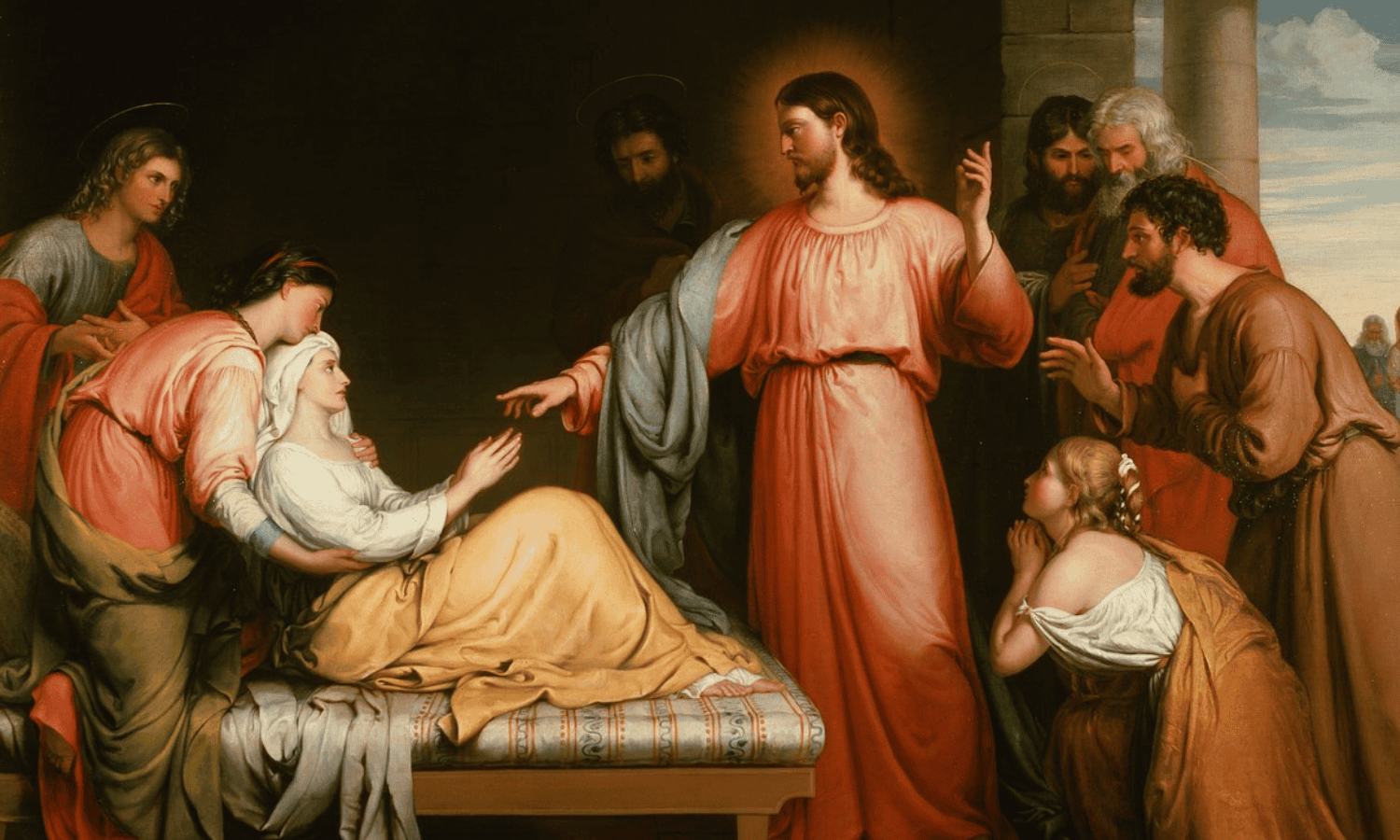
Christ the Physician
Anointing of the Sick is the sacrament which, through the anointing with blessed oil by the priest, and through his prayer to Christ Our Lord, gives health and strength to the soul and sometimes to the body when we are in danger of death from sickness, accident, or old age.
-
The Anointing of the Sick is not only for the final moments of life. The Church encourages reception of this sacrament when a person:
Is facing a serious illness or life-threatening condition
Has received a new serious diagnosis
Is preparing for major surgery
Is experiencing significant decline due to age
It is much better to receive the sacrament early, rather than waiting until a situation becomes urgent.
Receiving the sacrament before hospitalization, surgery, or advanced decline allows the person to participate peacefully and prayerfully—without the stress of an emergency situation.
-
All Catholics who have reached the age of reason and are in danger of death from sickness, accident, or old age.
We highly suggest getting this sacrament after the diagnosis of a potentially life threatening condition, before going to hospital
If you are not currently in the hospital, please call to set up an appointment to receive this sacrament on a weekday after the 12:10 pm Mass.
If you are in the hospital, please call the Archdiocese’s Catholic Chaplain Corps at 713-747-8445 for a request for Anointing of the Sick and Holy Communion.
-
The effects of the sacrament of Anointing of the Sick are:
an increase of sanctifying grace;
comfort in sickness and strength against temptation;
preparation for entrance into heaven by the remission of our venial sins and the cleansing of our souls from the remains of sin;
health of body when it is good for the soul.
-
We strongly encourage families to contact the parish as soon as a serious condition arises. Calling early:
Ensures a priest is able to come
Avoids panic and uncertainty
Allows the person to receive the sacraments with clarity and peace
There are a limited number of priests available in the parish and Archdiocese. Calling early greatly increases the likelihood that a priest can arrive in time.
Our desire is that no one be deprived of the sacraments because we were contacted too late.
-
If your loved one is admitted to the hospital, you may also request a Catholic chaplain through the hospital directly.
Please call our office at 713-747-8445 for a Hospital Chaplain request.
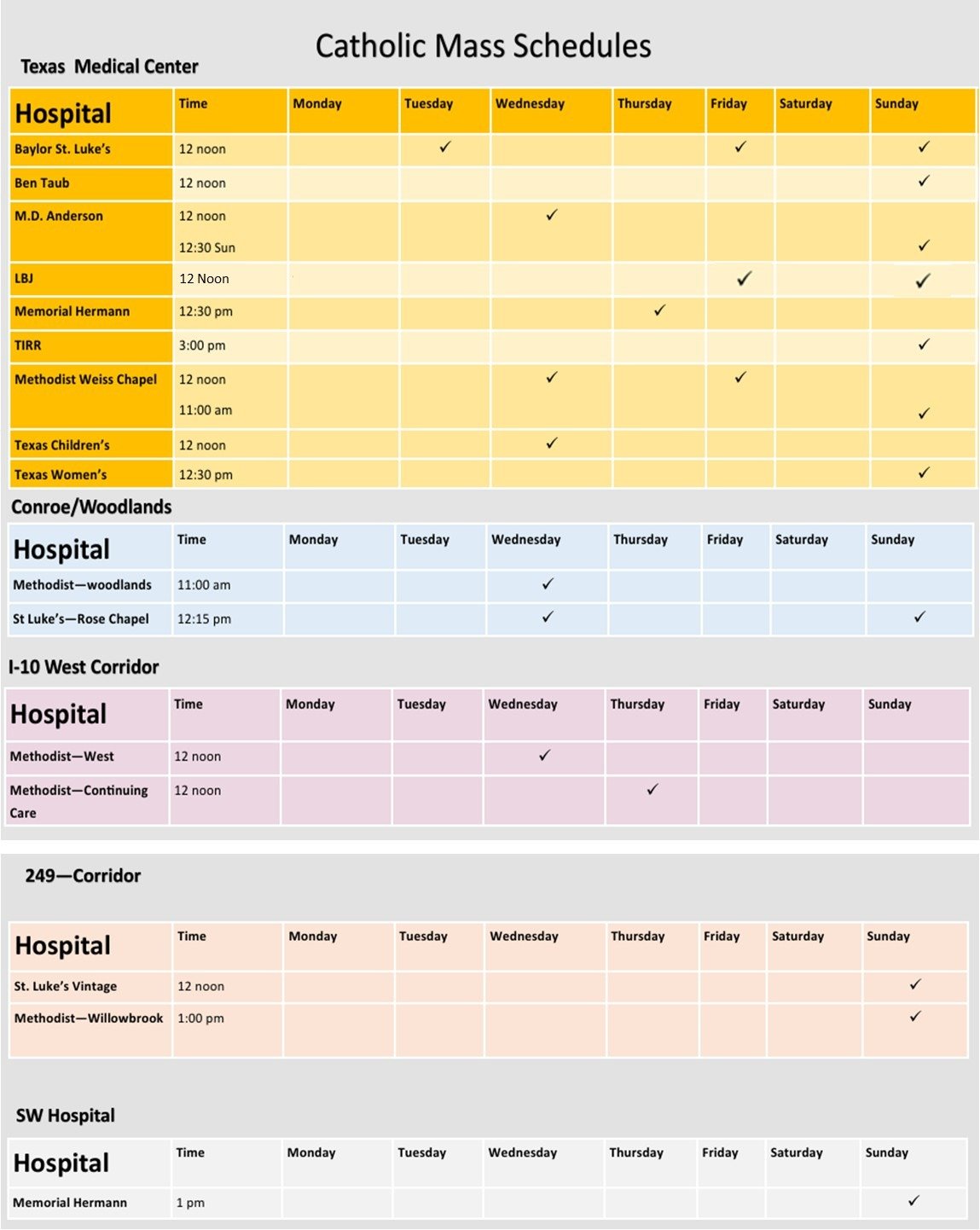
Catholic Mass Schedule at Area Hospitals
Areas served by the Catholic Chaplain Corps (call the CCC Main number 713-747-8445 for referrals)
Texas Medical Center
Conroe/The Woodlands
249 Corridor
I-10 West
Kingwood
Memorial City
Southeast Houston
Sugar Land
Baytown
View staff and hospitals served →
Chaplain services may include:
Holy Communion
Anointing of the Sick
Confession (when available)
When admitted, you must inform the hospital that you are Catholic and request a visit.
Request this Sacrament
We desire that the faithful receive the sacraments. If you are unsure whether someone should receive Anointing of the Sick, please contact the parish office. We are happy to guide you.
If you are not in the hospital, please call our office at 713-222-2289 to set up an appointment to receive this sacrament on a weekday after the 12:10 pm Mass. If you are calling outside of business hours, please leave a voicemail.
If you are in the hospital, please call the Archdiocese’s Catholic Chaplain Corps at 713-747-8445 for a request for Anointing of the Sick and Holy Communion.

Frequently Asked Questions
-
No.
While the sacrament may be given when death is near, it is intended for those who are seriously ill, preparing for serious surgery, experiencing significant decline due to age, or facing a potentially life-threatening condition.
The Church encourages requesting the sacrament soon after diagnosis, not only in the final hours of life.
-
No.
“Last Rites” refers to the final sacraments given when death is near:
Confession
Anointing of the Sick
Holy Communion (Viaticum)
The final sacrament before death is Holy Communion (Viaticum) — food for the journey to eternal life.
-
Yes.
A person may receive Anointing again if:
Their condition worsens
A new serious illness develops
Another major surgery is required
It is not limited to one time.
-
No.
The Catechism of Trent warned that it is a serious error to delay the sacrament until all hope of recovery is lost.
Requesting the sacrament early:
Allows the person to participate consciously
Avoids panic and rushed circumstances
Ensures the priest can arrive in time
We encourage families to call as soon as a serious condition arises.
-
No.
The Church cautions against indiscriminate use of the sacrament (for example, general calls at Mass for anyone with minor ailments).
This sacrament is reserved for serious illness or grave conditions. Treating it lightly diminishes the reverence due to this sacred gift.
If you are unsure whether a situation qualifies, please contact the parish for guidance.
-
Only a validly ordained priest or bishop may administer the Sacrament of the Anointing of the Sick.
Prayer with oil in other settings (such as healing prayer services) should not be confused with the sacrament.
-
By the grace of this sacrament, the recipient is:
Strengthened in mind, body, and soul
United more deeply to Christ’s Passion
Granted forgiveness of sins if needed
Given grace to endure suffering
Sometimes restored to health, if it is beneficial for salvation
This sacrament heals the whole person — body and spirit.
Livestream Mass Request for Homebound Parishioners
Complete the form below to receive livestream access and occasional parish email updates for the homebound.
Aging & End-of-Life Preparations
-
Dear Friends,
Periodically I am approached by people who recognize the need to be prepared for their, or their loved one’s, end-of-life. Many of us have questions about how, as a Catholic, one can prepare for end-of-life health care decisions as well as for funeral arrangements, etc..
I do not encourage using the common secular “Advance Directives”, otherwise known as a “Living Will” that are handed out by various secular sources. These are written from a secular world view and in some cases can lean in the direction of going against God’s plan for us as articulated by our holy Mother the Church.
The National Catholic Bioethics Center has a very good resource entitled “A Catholic Guide to End-of-Life Decisions“ which can be purchased online. This publication includes an explanation of Church teachings touching on the topics of advance directives, euthanasia, and physician assisted suicide. It also includes a “Medical Power of Attorney”, a “Health Care Proxy” form, and the “Advance Medical Directive” form.
The Catholic Guide to End-of-Life Decisions may be obtained at the following website:
https://www.ncbcenter.org/store/catholic-guide-to-end-of-life-decisions-english-pdf-downloadAdditionally, resources for helping to prepare for the rites and other arrangements surrounding one’s death and funeral may be found here:
https://www.archgh.org/media/15347/a-planning-guide-for-eol-care-071720.pdfIt is important to be prepared in advance for the sacred event of our passing from this phase of life. These preparations will enable us to express our wishes and ease the burden of our loved ones in their time of loss.
Oremus pro invincem (Let us pray for each other),
Fr. Paul Felix
Pastor -
The Archdiocese has partnered with MyCatholicWill to provide parishioners the opportunity to protect their families by creating a Will for free.
Many of our brothers and sisters – nearly 70% of American adults - have not prepared a Last Will and Testament.
When a loved one passes without a Will, families face significant logistical and financial challenges, only adding to their grief.
To address this need, the Archdiocese of Galveston-Houston is sponsoring free access to MyCatholicWill for any family who may benefit.
This initiative reflects our commitment to walk with our Catholic families in every season of life, ensuring their dignity and security.
Through MyCatholicWill, every parishioner can access the website, walk through the questions, and complete a Will – totally free of charge.
-
The Archdiocese of Galveston Houston has a list of resources for end-of-life preparations on their webpage.
View updated resources: archgh.org/aging
End-of-Life Care Planning Resources
Understand the Church’s pastoral guidelines for receiving the Sacrament of the Sick and End-of-Life spiritual care
Know the Catholic communal ritual for planning and celebrating funeral rites
Learn the Catholic understanding and practices for final disposition of the body
Know burial options at the Archdiocesan Catholic Cemeteries
-
St. Dominic Village Senior Community in Houston.
St. Dominic Village has 3 buildings of senior residents. They have independent living, assisted living and nursing home facilities. They care for approximately 200 residents total.
They are open to visitors joining activities, hosting events or activities, helping with donation drives, helping to decorate for holidays, performing music, campus beautification projects, multigenerational engagement and more!